
 |
 |
 |
|
 |
|
|


 |
 |
 |
Typology
Different types of design can be used in spatial sampling. The choice of the sampling design depends on the phenomenon investigated or may also be influenced by the methods of measurement.
Random sample
Note the ranges without samples – the phenomenon to be analyzed is underrepresented there.
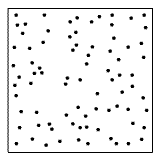 Random sample
Uniform random sample (with a minimum distance between points)
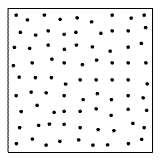 Uniform random sample
Systematic random sample
The selection shown below is by no means complete. However, it shows that "systematic" does not necessarily mean, "square"!
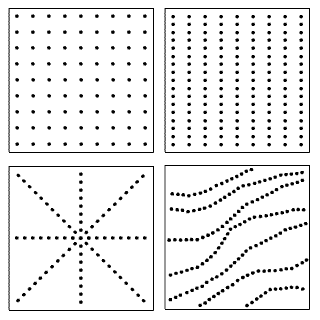 Examples of systematic samples
Stratified random sample with a regular grid (here at least two points per grid box)
Do you recognize the similarity of this type with the uniform sampling? The criterion here is not a minimum distance, but the division of the area into uniform subsets (strata).
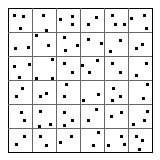 Stratified random sample with a regular grid
Stratified random sample with an irregular grid (hierarchical or authoritative sample)
The idea of a stratified random sample is applied here to an irregular grid. For example, this could represent administrative districts.
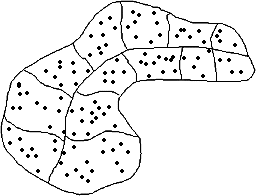 Stratified random sample with an irregular grid
Clustered random sample
You should have good reasons for selecting this sampling design. This design could also be a primary stage for values to be averaged within the cluster.
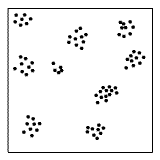 Clustered random sample
Clustered systematic sample
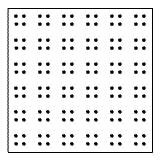 Clustered systematic sample
Examples of different types of sampling
Have a look at the following Flash animation showing examples of different types of sampling applied to Switzerland. The digital elevation model is shown as background information.
 |
|
|
|
|
|
|
|


